You posted a Reel. It got 47 views. Your friend posted something similar and hit 200K. You’re doing everything right — or so you think.
The truth? Most creators in India and around the world are working hard on Instagram without understanding how the Instagram Algorithm 2026 actually decides who sees their content. And without that understanding, you’re essentially posting into a void.
This guide breaks down exactly what the Instagram algorithm is in 2026, how it works across different content formats, the best time to post on Instagram, and the actionable steps you can take right now to improve your reach — whether you’re a beginner or an intermediate creator in Guwahati, across Assam, or anywhere else.
What Is the Instagram Algorithm?
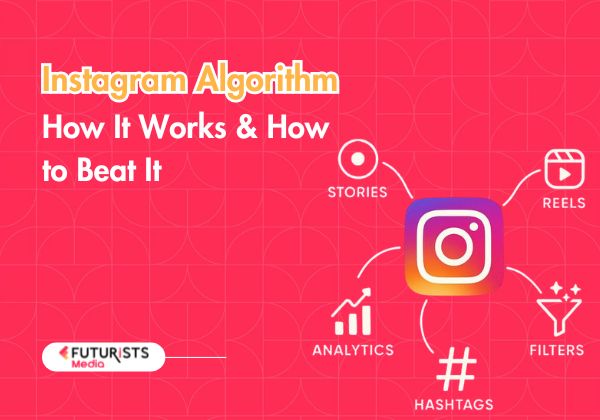
The Instagram algorithm is a set of machine learning rules that determines which content gets shown to which users — and in what order. It is not a single algorithm. In 2026, Instagram uses multiple algorithms, one for each surface:
- Feed (your home timeline)
- Reels (short-form video discovery)
- Stories (content from accounts you follow)
- Explore (content from accounts you don’t follow)
- Search results
Each of these surfaces has its own ranking logic, but they all share a common goal: keep users on the app as long as possible by showing them content they’re most likely to engage with.
How the Instagram Algorithm Works in 2026
Instagram’s algorithm ranks content using a combination of signals. Here’s what matters most in 2026:
1. Relationship Signals
The algorithm prioritizes content from accounts you interact with most. If a user regularly likes, comments, shares, or DMs a creator, that creator’s content appears higher in their feed and Stories.
2. Interest Signals
Instagram builds a profile of what each user cares about based on their past behaviour — what they watch, save, and skip. If your content fits into a topic a user consistently engages with, it gets recommended even if they don’t follow you.
This is why niche content often outperforms broad content. A fitness account in Guwahati that posts consistently about ‘morning workouts for busy professionals’ will perform better than one that mixes fitness, travel, and food randomly.
3. Relevancy / Recency
Fresh content gets a priority window. When you post, Instagram shows it to a small sample of your followers first. If that sample engages well, the algorithm expands your reach. If not, distribution slows.
4. Content Format Signals
In 2026, Instagram continues to heavily favor Reels over static images in terms of discoverability. However, carousels have seen a strong resurgence because users spend more time swiping through them — and time-on-content is a key signal.
- Reels: Best for reach and new audience discovery
- Carousels: Best for saves and shares — strong long-term reach
- Stories: Best for relationship and retention signals
- Static images: Lowest discovery potential, best for engaged existing followers
5. Profile Activity Signals
If your account gets frequent profile visits, link clicks, or follows from a post, the algorithm treats that post as high-value content and distributes it more aggressively.
Why Understanding the Instagram Algorithm Matters in 2026
Instagram has over 2 billion monthly active users. In India alone, there are 360+ million users as of early 2026. The competition for attention has never been higher.
If you’re a small business owner in Assam, a creator trying to monetize, or a brand building an audience — the algorithm is the gatekeeper. Understanding it is not optional. It’s the difference between 200 views and 200,000.
Here’s what’s changed specifically in 2026 that makes this knowledge urgent:
- Instagram now labels AI-generated content, and over-reliance on AI visuals can reduce trust signals.
- The Explore page now personalizes even more aggressively — niche creators have a bigger opportunity than ever.
- Instagram has rolled out a ‘Suggested Content’ label for posts shown to non-followers, expanding organic reach for original content.
- DMs and shares count more than likes in the ranking model.
Step-by-Step Guide to Working With the Instagram Algorithm in 2026
Step 1: Define Your Niche and Stick to It
The algorithm categorizes your account. If you post about three different topics, it doesn’t know who to show your content to. Pick one core theme and dominate it.
Example: A local restaurant in Guwahati shouldn’t post about recipes, travel tips, and cricket. Instead, post exclusively about Assamese cuisine — dishes, ingredients, behind-the-scenes prep.
Step 2: Optimize Your Profile for Discovery
Before the algorithm can work for you, your profile needs to be search-optimized:
- Use a keyword-rich name field (not just your brand name). Example: ‘Riya | Assamese Food Creator’ instead of just ‘Riya’.
- Write a bio that includes your niche keyword naturally.
- Use a recognizable profile photo — the algorithm rewards accounts with strong profile visit-to-follow ratios.
Step 3: Post Reels Consistently (But Don’t Sacrifice Quality)
Reels remain the #1 tool for organic reach in 2026. But here’s what most beginners miss: Instagram’s algorithm for Reels ranks based on replays, shares, and completion rate — not just likes.
- Keep Reels between 7–30 seconds for maximum completion rate.
- Hook viewers in the first 1–2 seconds with a bold visual or statement.
- Add captions — most users watch Reels on mute.
- Post 3–5 Reels per week if possible. Consistency beats virality.
Step 4: Use Carousels for Saves and Shares
Carousels drive saves — one of the strongest algorithm signals in 2026. A saved post tells Instagram: this content is so valuable, a user wants to return to it.
Winning carousel formats for 2026:
- ‘How-to’ guides (e.g., ‘5 Steps to Grow on Instagram in 2026’)
- Before and after transformations
- Data-driven listicles with visual stats
- Myth vs. fact content in your niche
Step 5: Prioritize Shares and DMs Over Likes
The 2026 algorithm weighs shares (send to others) and DM conversations much more than double-taps. Create content that people want to send to a friend.
Ask yourself before posting: ‘Would someone screenshot this or send it to a friend?’ If the answer is no, rethink the content.
Step 6: Engage Aggressively in the First Hour
After posting, the first 60 minutes are critical. Instagram shows your content to a test group of followers. High engagement in this window = broader distribution.
- Reply to every comment immediately.
- Share your new post to Stories.
- Engage with 10–15 accounts in your niche right after posting.
- Ask a genuine question in your caption to encourage comments.
Instagram Algorithm: Best Time to Post in 2026
One of the most searched questions is about the Instagram algorithm best time to post. The truth is: there is no universal best time. But there are smart ways to find YOUR best time.
General Guidelines for Indian Audiences
- Morning window: 7 AM – 9 AM (pre-work scroll)
- Lunch window: 12 PM – 2 PM (quick break browsing)
- Evening peak: 7 PM – 10 PM (highest traffic period in India)
For creators in Guwahati and Northeast India, the evening window (7–9 PM IST) consistently shows the best engagement, based on regional usage patterns.
Consistency matters more than timing. Posting at 8 PM every day trains both your audience and the algorithm
Best Practices for Beating the Instagram Algorithm in 2026
- Use trending Reels audio within 48 hours of it trending for a reach boost. Original audio and trending audio:
- Use 3–5 highly targeted hashtags instead of 30 generic ones. Niche hashtags in 2026 outperform broad ones. Hashtag strategy:
- Instagram uses alt text for content categorization. Write descriptive alt text with your niche keywords. Alt text on images:
- Tag your city or region (Guwahati, Assam, Northeast India) to appear in local discovery searches. Location tags:
- Use Instagram’s Collab feature to co-author a post with another creator. It reaches both audiences and doubles your social proof signals. Collab posts:
- Pin your top 3 performing posts to your profile. First impressions drive follow decisions. Pin your best content:
Conclusion
The Instagram Algorithm 2026 is not your enemy. It’s a system with clear rules — and once you understand those rules, you can use them to grow strategically.
Here’s the quick summary of what actually moves the needle:
- Create niche-specific, original content consistently
- Prioritize Reels for reach and carousels for depth
- Post during your audience’s peak activity window
- Drive shares and saves over chasing likes
- Engage actively in the first 60 minutes after every post
Whether you’re a creator just starting out in Guwahati or a brand scaling its presence across India, the fundamentals of how the Instagram algorithm works don’t change: give people content they value, and the platform will put it in front of more of them.
FAQ
Q1: What is the Instagram algorithm in simple terms?
The Instagram algorithm is a ranking system that decides which posts appear in your feed, on the Explore page, and in Reels. It analyzes your past behavior — what you like, save, comment on, and watch — and shows you more of the same. For creators, the better your content aligns with your audience’s interests and behavior, the more the algorithm distributes it.
Q2: Does the Instagram algorithm favor Reels over photos in 2026?
Yes, Reels still receive significantly more organic reach than static photos. This is because video content drives higher time-on-app, which is Instagram’s primary goal. However, carousels are a strong second choice because they encourage multiple swipes, which increases session time.
Q3: What is the best time to post on Instagram for Indian audiences?
For Indian audiences, the strongest engagement windows are 7–9 AM and 7–10 PM IST. Evening is the peak period. Use your own Instagram Insights to confirm your specific audience’s active hours — they vary by niche and follower demographics.
Q4: Does posting frequency affect the Instagram algorithm?
Yes. Consistent posting signals an active account, which the algorithm rewards with stronger distribution. Aim for 4–7 posts per week across all formats (Reels, Stories, carousels). Quality is still more important than volume — don’t sacrifice content quality just to post more.
Q5: How long does it take to see results after optimizing for the algorithm?
Most accounts see measurable improvement in reach and engagement within 4–8 weeks of consistent, algorithm-aligned posting. The algorithm rewards sustained activity, not overnight changes. Track your top-line metrics (reach, saves, shares, profile visits) weekly to measure progress.
Q6: Do hashtags still matter for the Instagram algorithm in 2026?
Hashtags still play a role, but their weight has decreased compared to previous years. Instagram now uses content-based categorization more heavily. Use 3–8 targeted, niche-specific hashtags. Avoid irrelevant or banned hashtags, which can actually suppress your content.